Food labeling is not only about building brand recognition and delivering marketing messages. In addition to the manufacturer’s mark, labels on food products contain a range of useful and important information that plays a key role in consumers’ purchasing decisions. It should be noted that food labeling is regulated by relevant legal acts, which require every producer and importer to include strictly defined product data on packaging.
Read more
What should a food label contain?
Food labels primarily serve an informational role. The information that must be included on food product packaging is determined by provisions contained in four legal acts. These acts and regulations include:
- Regulation (EU) No 1169/2011 of the European Parliament and of the Council of 25 October 2011 on the provision of food information to consumers,
- The Act of 25 August 2006 on Food and Nutrition Safety,
- The Act of 21 December 2000 on the Commercial Quality of Agricultural and Food Products,
- Regulation of the Minister of Agriculture and Rural Development of 23 December 2014 on the labeling of specific types of food products.
In addition, the basic information regarding the labeling requirements for food labels is also defined by amendments to Regulations (EC) No 1924/2006 and 1925/2006 of the European Parliament and of the Council, and the repeal of Commission Directive 87/250/EEC, Council Directive 90/496/EEC, Commission Directive 1999/10/EC, Directive 2000/13/EC of the European Parliament and of the Council, Commission Directives 2002/67/EC and 2008/5/EC, and Commission Regulation (EC) No 608/2004.
The most important information that must be included in food labeling includes:
- a name indicating the type of product or products,
- list of ingredients,
- net weight or volume of the food product,
- use-by date or best-before date,
- nutritional value,
- name and contact details of the entity placing the product on the market.
The list of ingredients must include all ingredients of a given food product, without omitting allergens and food additives. Importantly, correct food labeling requires highlighting information about substances causing allergies and intolerance symptoms by using a different font, color, or background.
In turn, nutritional value information must include data such as: energy value, fat and saturated fatty acid content, sugars, carbohydrates, protein, and salt. It is worth emphasizing that information on the degree of coverage of the recommended daily intake of a given ingredient is provided voluntarily, which is why such data most often appears on the packaging of dietary supplements and functional foods.
Why is food labeling so important?
In times when Poles’ nutritional awareness is growing, the topic of food is particularly relevant. Consumers are no longer interested solely in the price of food products, but also in their composition, information about the place of origin, and above all their impact on health. Correct food product labeling allows consumers to make informed purchasing decisions and better take care of their health.
Which devices should you choose for food labeling?
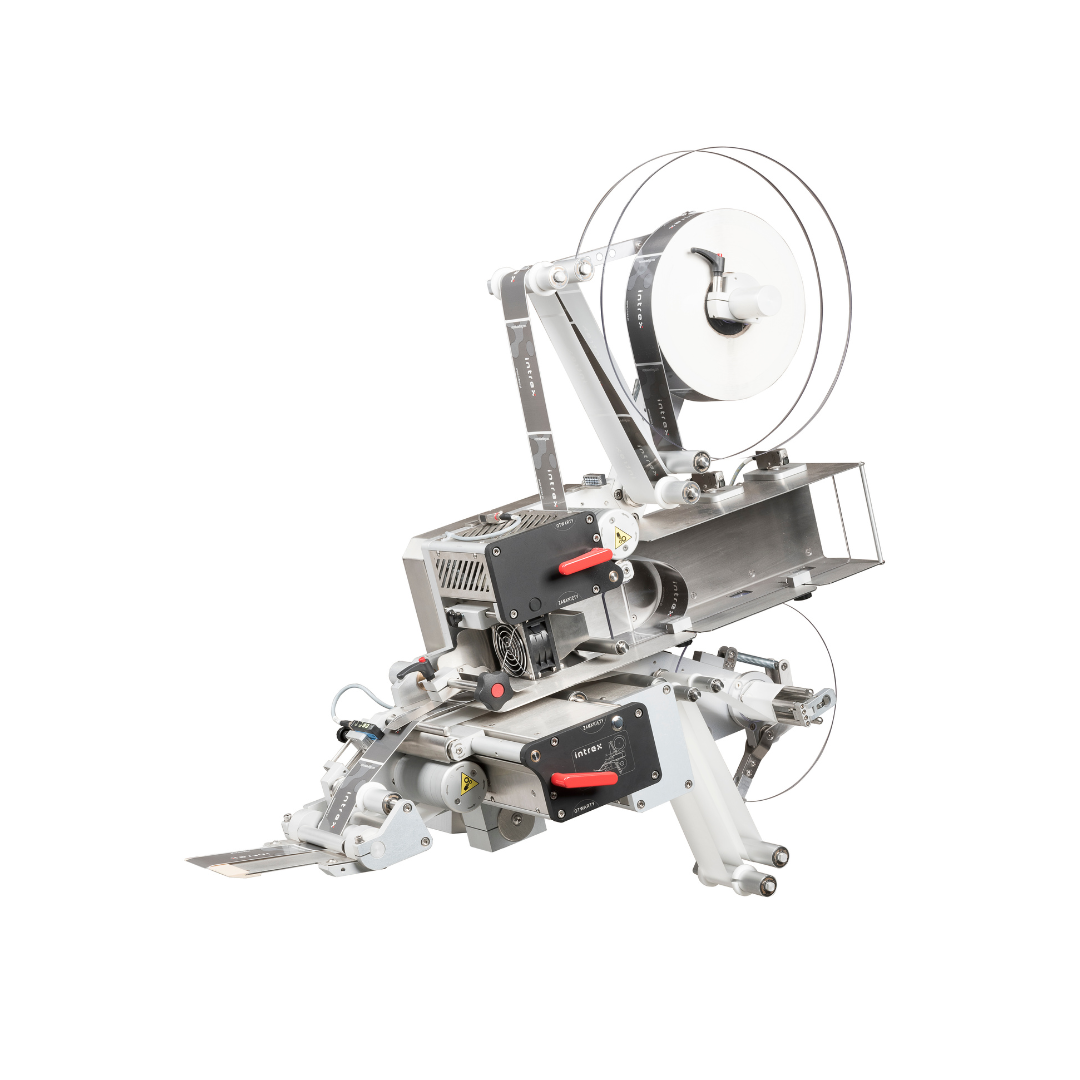
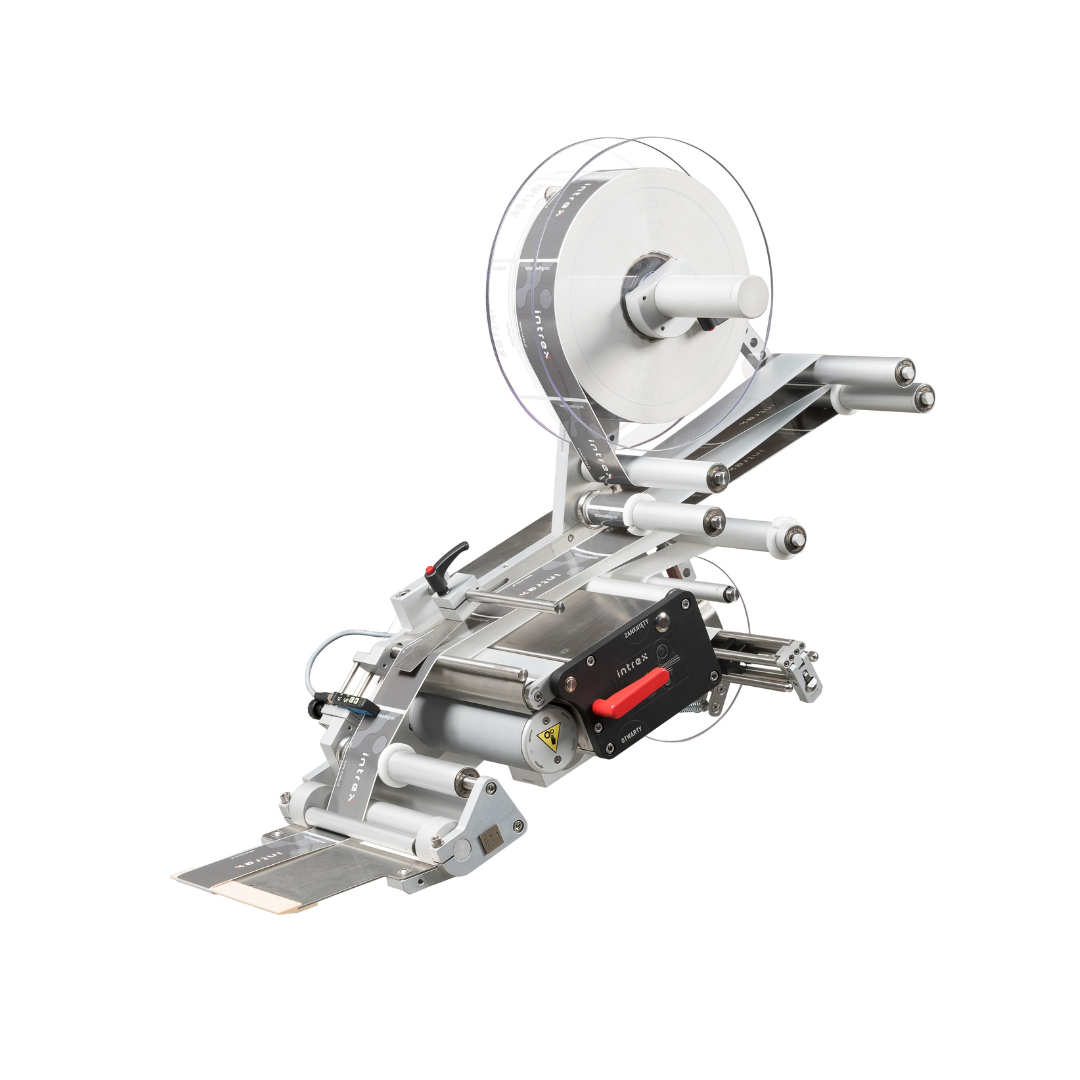
Intrex offers labeling machines that perfectly match the specific needs of businesses operating in the food industry. Our portfolio includes numerous models of automatic and semi-automatic labelers, adapted to work with a wide variety of packaging. Of particular note are the models for wrap-around labeling of cylindrical products: jar labeler , handling packaging of various sizes, and bottle labeler .
Why choose our food labeling solutions?
30 years of experience allow us to design and manufacture top-quality labeling machines. Thanks to a durable housing and proven components, our labelers can operate in the most demanding conditions, ensuring trouble-free operation for many years. Every device can be customized to meet individual customer needs. We provide our customers with full warranty and post-warranty support.